Kowa Company Ltd. · Nagoya, Japan · 1960s

Kowa
Prominar

The definitive archive of Kowa Cine Prominar lenses.

From the optical workshops of Nagoya to the sets of Arrival, Moonlight, and A Star Is Born. The complete technical, historical and cinematic record of the most sought-after vintage cinema lenses in the world.

7
Prime focals
60yr
Legacy
90%
Japanese CinemaScope market
Scroll

What are they

A different kind
of sharp

The Kowa Cine Prominar are a family of fixed focal length lenses — primes — originally developed for 35mm cinema cameras in the 1960s by Kowa Company Ltd. of Nagoya, Japan.

While modern optics are engineered to eliminate every imperfection, the Kowa were built at a time when glass, coatings and mechanics responded to a different set of priorities. The result is an image described as less clinical, more cinematic: soft without being blurry, characterful without being a caricature.

Today they are used by directors of photography behind some of the most visually distinctive films of the digital era — not despite their imperfections, but because of them.

01
Low contrast rendering

Medium-low contrast preserves detail in shadows and highlights — more dynamic range, more latitude in grade.

02
Warm golden flares

Single-layer coatings produce characteristically warm, golden internal reflections when a light source enters the frame.

03
Organic bokeh

Soft, slightly textured out-of-focus rendering with a progressive transition — not the clinical uniformity of modern lenses.

04
Cool base colour

A subtle blue-green tendency in the midtones — the chromatic paradox at the heart of the Kowa look.

05
Exceptionally compact

Among the smallest cinema primes ever produced. The anamorphics are the most compact 35mm anamorphics in existence.

06
Set consistency

Colour, contrast and bokeh remain remarkably consistent across all seven focals — rarer in vintage sets than it sounds.

Optical character

The Signature Look
explained

Six optical properties that act simultaneously to produce an image recognisable even without knowing which lens was used.

01
Contrast

Low contrast rendering

The tonal distance between shadows and highlights is smaller than in a modern lens. Highlights roll off gradually, preserving texture where other lenses simply burn.

02
Highlights

Soft highlight roll-off

The transition from correctly exposed to overexposed areas is progressive and organic. In high-dynamic-range situations the image doesn't explode — it breathes.

03
Flares

Warm golden flares

Single-layer coatings allow more light to reflect between internal elements. Warm, amber-gold halos that spread softly across the frame without destroying the underlying image.

04
Colour

Cool base tone

A subtle blue-green tendency in midtones contrasts with the warmth of the flares. Natural skin — neither the excess warmth of the Cookes nor the clinical neutrality of Zeiss.

05
Bokeh

Organic out-of-focus

Slightly textured defocus with a progressive transition — not the perfectly circular, uniform bokeh of modern optimised lenses. Something with more depth and life.

06
Resolution

Sharp centre, organic edges

Good central sharpness with a progressive fall-off toward corners. The point of attention is defined; the edges are soft and enveloping.

Together, these six properties produce what cinematographers call organic cinematic rendering: an image that appears captured, not manufactured.

Company history

From Nagoya
to Hollywood

A century-old company, a postwar optical division, and a lens that still appears in the credits of major productions today.

1894

Kowa Company founded

Established in Nagoya as a textile trading company. Over the following decades Kowa diversified into precision industrial sectors, capitalising on the manufacturing growth of the Aichi region.

1946

Kowa Koki — The optical division

Engineers from the optical department of the Toyokawa naval arsenal — dissolved after Japan's surrender — joined Kowa to create Kowa Koki. The rigour of naval optical engineering became embedded into cinema glass.

1950s

CinemaScope dominance — 90% of the Japanese market

As Hollywood introduced CinemaScope, demand for anamorphic lenses exploded worldwide. Kowa captured approximately 90% of the Japanese CinemaScope lens market — a figure that places the company at the centre of postwar Japanese cinema history.

1960s

The Cine Prominar era

Two defining lens families: the Cine Prominar Spherical and the Cine Prominar Anamorphic. Used extensively in film production, television and advertising across Japan and internationally.

2010s

The digital rediscovery

As digital sensors became almost oppressively sharp, cinematographers began seeking alternatives. Arrival, Moonlight, A Star Is Born and First Man brought these sixty-year-old lenses back to the centre of contemporary cinematography.

Optical anatomy

Inside the glass —
focal by focal

Schematic cross-sections of each focal's optical design — element groups, aperture position, and the physical origin of the Kowa visual character.

20mmT2.6
iris S35
Elements / Groups7 el. / 5 gr.
Angle of view~94° Super 35
CoatingsSingle-layer (1960s)
Strong barrel distortion at edges. Spectacular flares. Edge fall-off most pronounced of the set.
32mmT2.3
iris S35
Elements / Groups6 el. / 5 gr.
Angle of view~66° Super 35
CoatingsSingle-layer (1960s)
Natural perspective. Minimal distortion. One of the most versatile narrative focals in the set.
50mmT2.3
iris S35
Elements / Groups6 el. / 4 gr.
Angle of view~46° Super 35
CoatingsSingle-layer (1960s)
Honest perspective. Most balanced bokeh of the set. Near-parallel ray convergence — the classic normal lens geometry.
75mmT2.3
iris S35
Elements / Groups7 el. / 5 gr.
Angle of view~32° Super 35
CoatingsSingle-layer (1960s)
Visible perspective compression. Bokeh at its most expressive. The cinematic portrait focal.

Diagrams are schematic representations. Exact element counts and curvatures vary between production batches.

Technical database

The lenses,
one by one

Complete specifications for every focal in the Kowa Cine Prominar set.

15mm
T4.0
Close focus0.17 m
FormatSuper 35
Extremely rare. Ultra-wide. Seldom found in complete sets.
20mm
T2.6
Close focus0.25 m
FormatSuper 35
Extreme wide. Spectacular flares. Visible edge fall-off.
25mm
T2.3
Close focus0.28 m
FormatSuper 35
Versatile wide. Dialogue, interiors, tracking shots.
32mm
T2.3
Close focus0.25 m
FormatSuper 35
Natural perspective. Excellent subject-background separation.
40mm
T2.3
Close focus0.33 m
FormatSuper 35
The cinematic focal. Close to human vision. Extremely versatile.
50mm
T2.3
Close focus0.50 m
FormatSuper 35
The classic. Honest perspective. Beautiful bokeh.
75mm
T2.3
Close focus0.70 m
FormatSuper 35
Cinematic portrait. Bokeh at its most expressive.
100mm
T2.6
Close focus1.00 m
FormatSuper 35
Maximum compression. Very shallow depth of field.

Filmography

On screen
since 1974

Confirmed productions that used Kowa Cine Prominar lenses — from The Godfather Part II to Moonlight.

2016
Moonlight
Dir. Barry Jenkins · DP James Laxton
Anamorphic
The most cited reference for Kowa anamorphics. Horizontal flares, oval bokeh and moderate contrast create an intimate, poetic aesthetic inseparable from the film's emotional impact. Academy Award — Best Picture.
2016
Arrival
Dir. Denis Villeneuve · DP Bradford Young
Spherical
Bradford Young chose vintage lenses to avoid the clinical look of modern optics. The Kowas contributed to the film's soft, dreamlike atmosphere and deliberate narrative ambiguity.
2018
A Star Is Born
Dir. Bradley Cooper · DP Matthew Libatique
Anamorphic
Kowa anamorphics oscillate between the epic scale of concert sequences and the intimacy of private moments — a versatility few vintage lenses can deliver.
2018
First Man
Dir. Damien Chazelle · DP Linus Sandgren
Anamorphic
Kowa anamorphics for the intimate sequences, contrasting their organic warmth with IMAX cold for the space scenes — reinforcing the human dimension of Armstrong's story.
2015
Straight Outta Compton
DP Matthew Libatique
Spherical
Deliberate choice to recreate the visual texture of the 1980s and 90s. Warm flares and soft image delivered an authenticity modern optics could not provide.
2021
No Sudden Move
Dir. & DP Steven Soderbergh
Anamorphic
Kowa anamorphics to build a 1950s film noir aesthetic — compressed image and vintage flares evoking the period with precision.
2018
At Eternity's Gate
Dir. Julian Schnabel
Spherical
Images that transmit the fragmented, emotional perception of Van Gogh's world — organic, painterly, never clinical.
2018
The Strangers: Prey at Night
DP Ryan Samul
Anamorphic
Deliberate vintage look to evoke the 80s slasher genre within a contemporary production.
2023
May December
Dir. Todd Haynes
Spherical
Visual aesthetic that plays deliberately with artificiality and emotional distance — reinforcing the film's moral ambiguity.
1976
Rocky
Dir. John G. Avildsen
Classic · Anamorphic
One of the earliest landmark productions to use Kowa anamorphics — gritty, working-class visual grammar.
1974
The Godfather Part II
Dir. F.F. Coppola · DP Gordon Willis
Classic · Anamorphic
Gordon Willis — "The Prince of Darkness" — used Kowa anamorphics in one of the most photographed films in cinema history.
2016
Jason Bourne
DP Barry Ackroyd
Spherical
Vintage lenses including Kowa contributed to a dynamic, cinematic image that reinforces the film's relentless pace.

Available now

TLS PrimeLens Set —
Kowa Cine Prominar

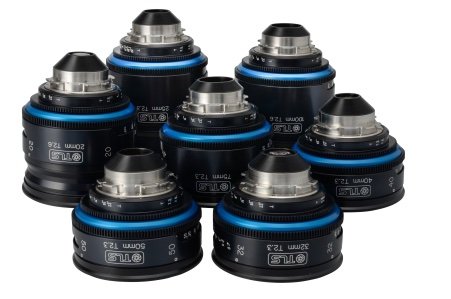
Kowa Cine Prominar TLS PrimeLens Set — seven focal primes rehoused by True Lens Services

Kowa Cine Prominar · TLS PrimeLens Set

Seven focals. Original 1960s optical character. The same flares, contrast, bokeh — inside a housing engineered by True Lens Services for the demands of modern digital production.

RehousingTrue Lens Services (TLS) — United Kingdom
TypeSpherical Primes
MountPL — industry standard
Front diameter110mm — uniform across all focals
ScalesMetres & feet — CNC precision
FormatSuper 35
Compatible withARRI Alexa, RED, Sony Venice, Blackmagic URSA
OpticsOriginal Kowa glass — fully restored & calibrated

Focals included

20mm T2.625mm T2.332mm T2.340mm T2.350mm T2.375mm T2.3100mm T2.6
Available now
$139,000
7-lens TLS rehoused set · Price on enquiry
Enquire about this set Ask a question

Context

Kowa vs
the classics

How the Kowa Cine Prominar sit alongside the other great vintage cinema lens sets.

LensContrastColour baseFlaresBokehSet price (rehoused)
Kowa Cine ProminarMedium-lowCool base, warm flaresGolden, pronouncedOrganic, textured$150k – $180k
Super BaltarLow-mediumNeutral-warmSoft, discreetCreamy, very soft€150k – €200k
Cooke Speed PanchroLow-mediumWarm, flattering skinSoftVery smooth€150k+
Zeiss Super SpeedMedium-highNeutralDiscreetClean, circular€60k – €90k
Canon K35MediumNeutral-warmModerateSmooth€200k+

Often described as the Japanese Super Baltar — comparable optical character, greater availability, and significantly more accessible pricing.

Mechanical modernisation

The rehousing
process

Original 1960s optical glass. Precision-engineered modern housing. How it works — and who does it best.

Rehousing preserves the original optical block and mounts it inside a new mechanical housing built to modern cinematography specifications. Same flares, same contrast, same bokeh — with the reliability and compatibility of a current high-end lens.

Reference standard
True Lens Services
United Kingdom

The global benchmark for vintage lens rehousing. Their PrimeLens Set is the definitive rehoused version of the Kowa sphericals — used by rental houses, studios and collectors worldwide.

  • PL mount — industry standard
  • 110mm front diameter, uniform across the set
  • Extended focus throw
  • Standard follow focus gears
  • Metres & feet scales, CNC precision
  • Full optical cleaning and calibration
P+S Technik
Germany

Precision German engineering with a long record in lens adaptation. Known for mechanical accuracy and meticulous finish. Well regarded in the European market.

  • Precision German manufacturing
  • PL mount compatibility
  • Professional rental specifications
Cinevized
Boutique rehousing

A specialist operation focused on Japanese vintage lenses. Artisanal approach, limited production runs. Sought after by collectors and cinematographers looking for something distinctive.

  • Limited edition rehousings
  • Focus on Japanese vintage optics
  • Highly regarded by collectors

Common questions

Frequently asked
questions

Everything you need to know about the Kowa Cine Prominar lenses.

The spherical set covers T2.3 across most focal lengths — 32mm, 40mm, 50mm, 75mm and 100mm — with the 20mm at T2.6. This makes the set remarkably consistent for multi-lens productions where exposure matching between cuts is critical.

The standard spherical set comprises six focal lengths: 20mm, 32mm, 40mm, 50mm, 75mm and 100mm. The TLS PrimeLens rehoused version covers the same range, all in matching 110mm front diameter housings with PL mount.

Yes — when rehoused by specialists like TLS, they cover Super 35 and in some cases full-frame sensors. The 1960s single-layer coatings produce a distinct organic quality that complements the clinical sharpness of modern digital sensors, which is precisely why they became popular in the digital era.

Notable productions include Arrival (2016), Moonlight (2016), A Star Is Born (2018) and First Man (2018). These films brought the lenses back into mainstream cinematography after decades of obscurity, cementing their reputation as a tool for serious visual storytelling.

As digital sensors became exceptionally sharp and clean, many cinematographers found the results too clinical. The Kowa's low contrast, warm golden flares, organic bokeh and subtle cool base tone provided a counterbalance — adding texture and character that previously required extensive grading to achieve.

Both share a similar optical character — low contrast, organic rendering and vintage warmth — which is why the Kowa is often called the Japanese Super Baltar. The key differences: the Kowa has a cooler base tone with more pronounced golden flares, while the Baltar tends warmer and more neutral. The Kowa is also significantly more accessible in price and availability.

The Cooke Speed Panchro has slightly higher central resolution with a warmer, more flattering skin tone rendering. The Kowa has comparable centre sharpness but with more pronounced edge fall-off, cooler midtones and more dramatic flare behaviour. Both are soft by modern standards — the Kowa feels rawer and more expressive, the Cooke more refined.

A complete TLS PrimeLens rehoused Kowa set typically ranges between $150,000 and $180,000 for a 7-lens TLS rehoused set. This is comparable to the Super Baltar (€150k–€200k) and significantly below the Canon K35 (€200k+), while delivering a similar vintage optical character.

Rehoused sets are available through specialist rental houses in the UK, US and Europe. True Lens Services (TLS) in the UK is the primary rehousing source and can advise on availability. Unhoused original sets occasionally appear on the vintage lens market, but optical condition varies significantly and professional rehousing is strongly recommended for production use.

The TLS PrimeLens Set is True Lens Services' definitive rehousing of the Kowa Cine Prominar spherical lenses. TLS preserves the original 1960s optical block and mounts it in a precision-engineered modern housing with PL mount, 110mm uniform front diameter, extended focus throw, standard follow focus gears and dual metre/feet scales — making the lenses fully compatible with contemporary professional cinematography workflows.

Get in touch

Let's talk
about the set.

Technical questions, production enquiries, or pricing requests — we respond within 48 hours.

info@kowaprominar.com

If enquiring for a production, include your camera, shooting dates and technical requirements.

We respond within 48 hours.